Risk and regulatory notice: Binary options are high-risk, all-or-nothing products and may be prohibited or restricted for retail customers where you live. You can lose the full amount committed to a trade. Verify the legal entity and its authorisation in an official regulator register before sending money or identity documents. This page is general information, not personal financial advice.
After reviewing regulatory filings across multiple jurisdictions and reading through hundreds of user complaints, I can say this upfront: Quotex is a binary options broker that combines an unusually low entry barrier with structural risks most reviews gloss over. My Quotex review focuses on what actually matters when real money is on the line, the fees, the payout math, the regulatory gaps, and the withdrawal patterns that recur across complaint databases.
Here’s my verdict before the deep dive: Quotex works as a curiosity platform for very small, disposable experiments. For anything beyond that, the math and the trust profile make it a poor choice compared to regulated alternatives. The binary options model itself, risking $100 to win $92, means a 50% win rate produces steady losses even with flawless execution. Add in offshore registration and recurring withdrawal complaints, and the case for using meaningful capital here falls apart.
Platform Overview
What Is Quotex? Platform Overview and Background
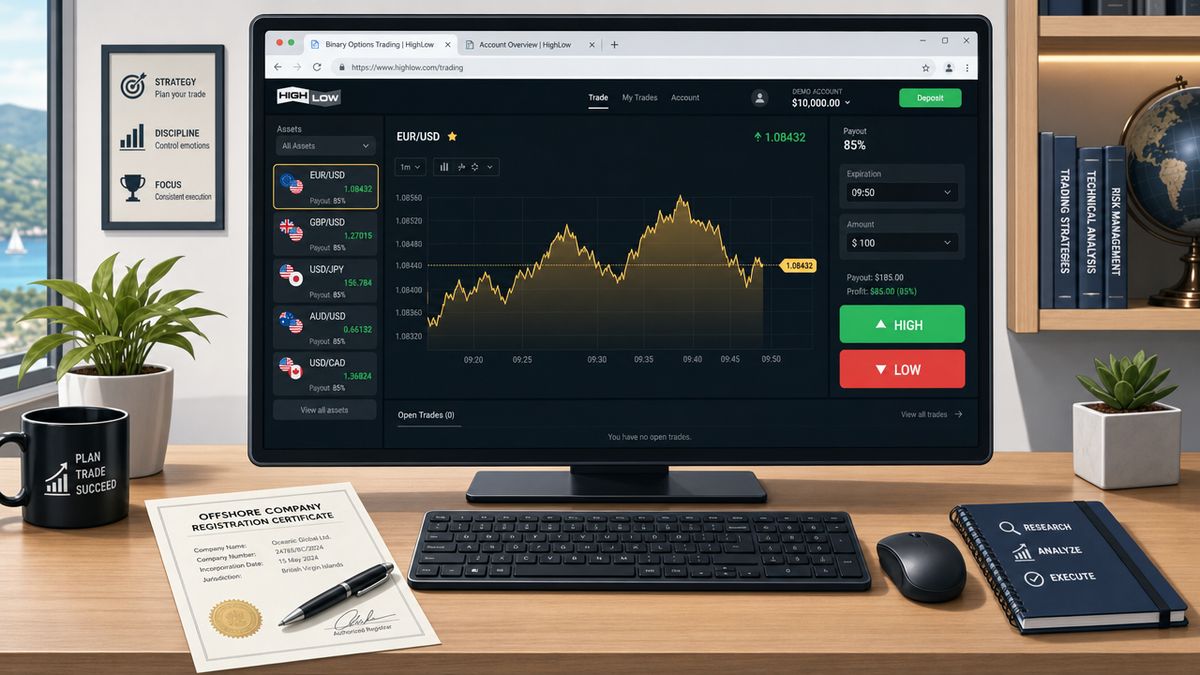
Quotex is a proprietary binary options platform that lets traders bet on whether an asset’s price will be higher or lower at a fixed expiry, ranging from 5 seconds to 4 hours. The interface is clean, the onboarding is fast, and the $10 minimum deposit makes it one of the cheapest binary platforms to test. That accessibility is genuinely the strongest thing Quotex has going for it.
The complication starts with the entity behind the platform. Quotex is operated by ON SPOT LLC Group[1], registered in Charlestown, St. Kitts and Nevis. The platform runs across two main domains, quotex.io and quotex.com, with additional references to QX Broker. That domain fragmentation matters because it makes verifying the legal operator harder than it should be, especially for users who land on one mirror through an affiliate link and assume it’s the official site.
Who Operates Quotex and Where
St. Kitts and Nevis offers minimal financial-services oversight compared with tier-one jurisdictions. Quotex once held registration with the International Financial Market Relations Regulation Center (IFMRRC), but that registration expired in 2021, and IFMRRC was never a recognized government regulator to begin with. It’s a private self-regulatory organization, not a statutory authority. When sources describe Quotex as “unregulated,” that’s what they mean: no government license from any recognized financial authority.
The QX Broker name appears in customer-facing materials and in Semrush traffic data showing users frequently move from quotex.com to qxbroker.com. The domains appear together in a CMVM warning, but the legal separation between them isn’t transparent.
Who Quotex Targets
Semrush data shows the audience profile clearly. In April 2026, quotex.io drew 27.18K visits with Bangladesh accounting for 34.91% of traffic, Brazil 22.11%, and Pakistan 17.97%. Quotex.com pulled 65.69K visits in the same period, concentrated in India (18.89%), Bangladesh (18.25%), and Ukraine (12.64%). Direct traffic dominates both sites, but that category does not show whether visitors arrived through affiliate links, social media, or word-of-mouth rather than organic search. As checked on 26 September 2026, quotex.com redirected to qxbroker.com from our test location; the destination may differ by region.
That geographic profile tells me Quotex targets traders in jurisdictions where regulatory enforcement against offshore platforms is limited and where the $10 entry point makes it accessible to retail users with small disposable income. It’s not a coincidence that the platform’s marketing skews toward beginner-friendly language and “high payout” promises.
Account Types and Minimum Deposit Requirements
Quotex runs a three-tier account structure that determines withdrawal speed and a few peripheral perks. The tiers don’t materially change the underlying product, but they shift the experience around the edges.
| Tier | Minimum Deposit | Reported speed; not a contractual guarantee | Notable Perks |
|---|---|---|---|
| Standard | $10 | ~48 hours | Basic platform access |
| Pro | $500 | ~24 hours | Priority processing |
| VIP | $1,000+ | ~24 hours | Priority support, contests |
Standard Account ($10 Minimum)
The Standard tier is what most users start with, and it’s the only tier I’d recommend anyone fund. You get full platform access, the same asset list, and the same payout structure as higher tiers. Withdrawal processing was reported at around 48 hours in independent testing. In its Payment Policy §4.8[2], Quotex says it decides on a withdrawal request within seven days, extendable in some cases to fourteen; the text does not call these business days or promise receipt of funds in that window. Payment-provider timing and verification are separate. Check eligibility in your jurisdiction before considering any live deposit. The $10 minimum deposit makes this the least-risky way to test the platform if you’re determined to try it.
Pro Account ($500 Minimum)
Pro halves stated withdrawal time to roughly 24 hours and adds some promotional access. Whether the speed improvement is worth committing $500 to an offshore platform is a different question. I don’t think it is. The structural risk doesn’t change just because you’ve deposited more.
VIP Account ($1,000+ Minimum)
VIP adds priority support, access to trading contests, and account manager contact. The marketing emphasizes these perks heavily. In practice, “priority support” at an offshore broker with documented withdrawal complaints isn’t a meaningful upgrade if the platform decides to restrict your account. Larger balances also increase exposure to the very risks the rest of this review documents.
Sign-Up and Onboarding Experience
Registration takes under two minutes. Email, password, country, currency. No upfront KYC. You can be inside the platform clicking around within minutes, which is part of the design: minimize friction, get users trading fast.
Demo Account With Unlimited Virtual Funds
The demo account loads with $10,000 in virtual funds and reloads on demand, with no time limit. I’ll give Quotex credit here: the demo is genuinely useful for testing execution speed, expiry timing, and how the platform’s payout percentages shift through the day. If you want to evaluate the platform without depositing, the demo environment is the right place to start. Just understand that demo execution and live execution aren’t always identical, and demo payouts can look more generous than what you’ll see with real money.
Verification Rules and Withdrawal Thresholds
Quotex’s Payment Policy §§2.5–2.7[2] allows it to request identity, residence, financial-position and payment-related documents during verification. It gives the company up to ten working days to verify after notifying the client, extendable to thirty working days at its discretion. The verification process matters because complaints in public forums show verification turning into an indefinite limbo that holds withdrawals hostage.
Trading Platform
Trading Platform and User Interface
The proprietary web platform is one of Quotex’s better features. Charts load in under two seconds during testing, trade execution averages under one second, and the layout is clean enough that a complete beginner can place a trade within five minutes of signup. The trade-off is depth: this is a platform built for speed, not analysis.
Charting Tools and Indicators
Quotex offers more than 29 technical indicators, multiple chart types (candlestick, line, area, bars, Heikin Ashi), and basic drawing tools. That’s adequate for binary-options-style trading, where decisions happen in seconds and complex multi-timeframe analysis is rarely the differentiator. Compared to MT4 or MT5, though, the toolkit is shallow. You can’t run custom indicators, you can’t backtest, and you can’t connect external analytical tools.
Mobile App Performance
The Android app (Google Play) and iOS Progressive Web App (PWA — no native App Store app available mirror the web experience and run smoothly on recent devices. Execution speed is comparable to desktop. The app’s main weakness is the smaller screen forcing compromises on chart detail, which matters more for short-expiry trading than people expect.
Missing Features and Research Limitations
This is where Quotex falls behind established brokers. No real-time economic calendar integrated into the platform. No serious news feed. No analyst commentary, no fundamentals data, no earnings calendars. Built-in trading signals exist and the marketing claims 87% accuracy, but they may be just a marketing feature.
Tradable Assets and Contract Types
Quotex advertises 400+ total instruments, including 95+ binary instruments spanning forex, cryptocurrencies, commodities, indices, and stocks. The breadth sounds impressive on paper, but quality varies sharply across the menu.
Binary Options Instruments
Major forex pairs (EUR/USD, GBP/USD, USD/JPY), major indices, and large-cap crypto produced the most consistent payout behavior in testing. Minor pairs and exotic instruments showed wider payout variability and lower stated returns. The full asset breakdown shows that not everything on the menu is worth trading, even within the platform’s own offering.
Contract Durations: 5 Seconds to 4 Hours
Ultra-short expiries (5, 15, 30 seconds) dominate the platform’s marketing. They’re also where the math turns most punishing. At a 5-second expiry, you’re essentially betting on noise, with no time for any genuine signal to develop. Combined with payouts averaging 85% to 92%, this is a structure designed to grind capital down even for users who win slightly more than half their trades. Longer expiries (1 to 4 hours) allow some actual analysis to factor in, but they also remove much of what makes binary options appealing to thrill-seekers in the first place.
Fees & Costs
Fees, Spreads, and Hidden Costs
Quotex’s marketing emphasizes “no fees,” and on the surface that’s mostly true. The cost structure is hidden inside the payout percentages and a few specific clauses most users miss until they trigger them.
Deposit and Withdrawal Fees
Standard deposits and the first two daily withdrawals carry no fee. From the third successful withdrawal in a single calendar day onward, a fee may apply. The Service Agreement §7.28[1] reserves Quotex the right to charge 3% from the third successful withdrawal in the same calendar day; it does not say the fee is automatic on the third request. The Payment Policy §§4.6–4.7[2] says method-specific charges and limits can vary. Crypto withdrawals start at a $50 minimum for some currencies, and payment networks may pass through their own transfer charges that have nothing to do with Quotex but still hit your bottom line.
Inactivity Fee Structure
Here’s the one most users miss. After 180 days of inactivity, Quotex charges 1% of the account balance per day, with a $1/day minimum[1] under Service Agreement §7.27. That clause can erode a dormant balance to nothing within months. If you fund the account and then walk away, you don’t get to come back to the same balance a year later. This is the kind of term that gets buried in the agreement and surprises users who assumed their funds were just sitting there.
Spread and Markup Considerations
Quotex doesn’t run traditional spreads because binary options don’t work that way. The “cost” is embedded in the payout: when you risk $100 to win $85 to $92, the platform’s edge is the gap between your risk and your potential return. That gap is the spread equivalent, and it’s the single most important number in the entire review.
Payout Rates: Marketing Claims vs. Reality
This is where I think most Quotex reviews fail readers. They quote the headline number and move on. The headline number doesn’t reflect what real trading looks like.
Advertised Payouts of Up to 98%
Quotex markets payouts of “up to 98%.” That figure applies to a narrow band of assets during specific high-liquidity windows. The vast majority of trades, on the vast majority of assets, deliver materially less.
Real-World Payout Variability
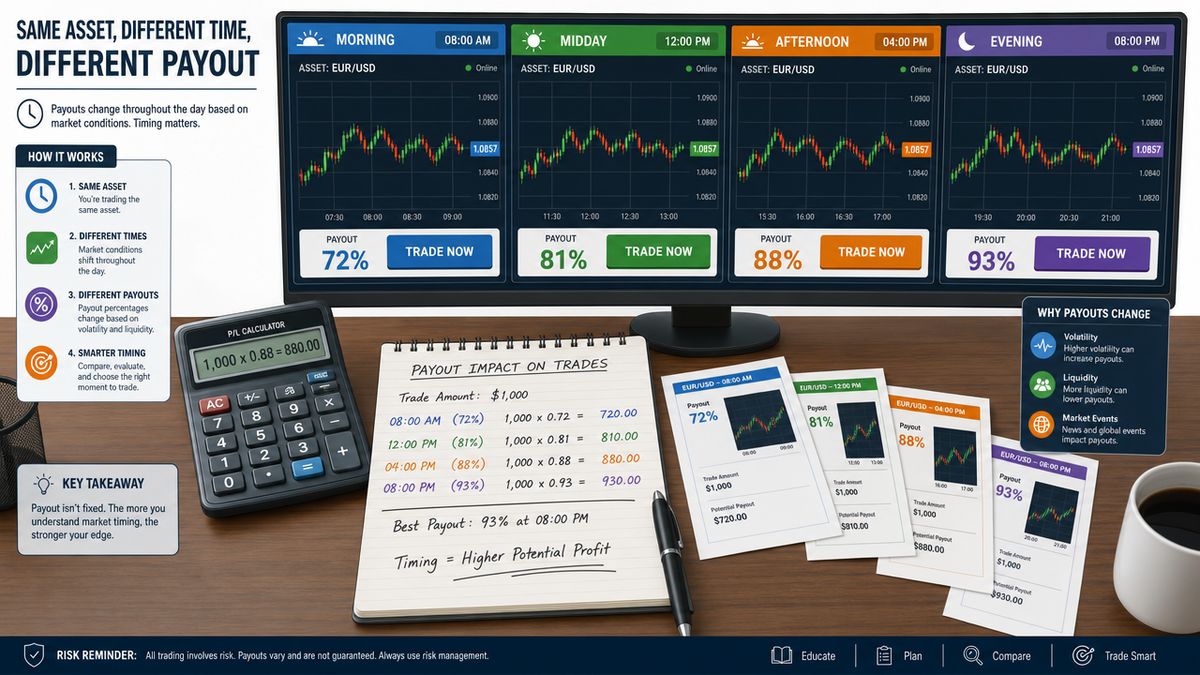
In BinaryOptions.net’s review, the reviewer reports seeing payouts move from 82% to 68% on the same asset at different times. Peak returns were typically 2% to 4% below advertised rates. Off-peak returns ran 8% to 18% lower.
Now think about what that means for the math. If you’re winning at a 55% rate with an 85% payout, your expected value per $100 trade is: (0.55 × $85) – (0.45 × $100) = $46.75 – $45 = $1.75 positive. Drop the payout to 75%, which is well within normal Quotex range for off-peak trading, and the same 55% win rate gives you: (0.55 × $75) – (0.45 × $100) = -$3.75 negative. The payout swing flips a winning strategy into a losing one without your win rate changing at all.
How Account Tier Affects Payouts
VIP and Pro accounts don’t receive systematically better payout rates in my reading of the data. Marketing implies they do, but I haven’t seen evidence in independent testing that confirms it. The differences are in withdrawal speed and support access, not in trade economics.
Deposits & Withdrawals
Deposit and Withdrawal Process
Funding the account is fast. Getting money out is where the story gets uneven.
Accepted Payment Methods
Quotex accepts Visa and Mastercard, more than 24 cryptocurrencies (BTC, ETH, USDT, USDC and others), and various regional e-wallets that vary by country. Bank transfers are available in some jurisdictions. Crypto deposits typically clear fastest, with USDT on TRC-20 usually showing up in the account within minutes.
Withdrawal Decisions: Policy Window vs Reported Speed
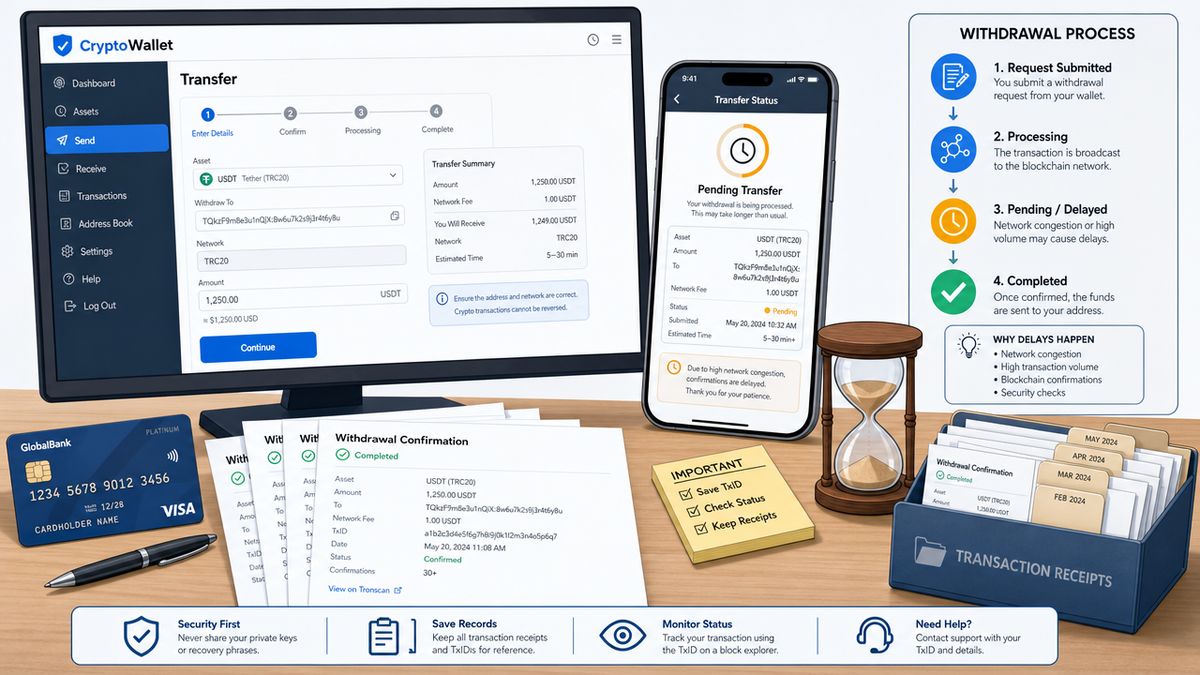
Advertised or observed 24–48-hour speeds should not be confused with the Payment Policy §4.8[2]: Quotex says it makes a decision on a withdrawal request within seven days, extendable to fourteen in some cases. A decision is not the same as receiving funds, and the policy does not call these business days. Verification and payment rails can add further time. See the withdrawal guide for the steps and limits.
Common Withdrawal Problems Users Report
Across Trustpilot, Forex Peace Army, Reddit’s r/binaryoptions, and the BrokersView complaint feed, the same patterns repeat:
- Withdrawal requests pending well past stated timelines
- Sudden requests for additional verification documents mid-withdrawal
- Account restrictions triggered after profitable streaks
- Demands for additional deposits to “release” pending withdrawals
- Generic support responses that don’t address the specific complaint
On Trustpilot, Quotex carries a mixed score with a long tail of one-star reviews concentrated on withdrawal issues. Reddit threads in r/binaryoptions consistently surface warnings, and Forex Peace Army’s complaint section has documented unresolved disputes going back years.
Regulation & Trust
Regulation and Trust: The Biggest Concern
This section matters more than every other section combined. Regulation determines whether you have meaningful recourse when something goes wrong.
Offshore Registration and Expired IFMRRC Status
St. Kitts and Nevis offers Quotex a legal entity. It doesn’t offer traders investor protection, segregated client funds verified by audit, or a compensation scheme. The expired IFMRRC registration wasn’t meaningful protection even when active. There is no recognized government regulator currently supervising Quotex’s operations.
Warnings From CMVM, KNF, BAPPEBTI, SCM, CNMV, and CONSOB
Multiple regulators have issued public warnings or notices naming Quotex-linked entities or domains: Portugal’s CMVM, Poland’s KNF, Malaysia’s SCM, Indonesia’s BAPPEBTI, Spain’s CNMV, and Italy’s CONSOB. Their records differ in wording, date, entity and jurisdiction; none is a blanket finding about every later Quotex-branded operator worldwide.
Third-Party Trust Ratings
The third-party scores tell a confused story. WikiFX gives Quotex 1.52 out of 10. DayTrading.com rates regulation and trust at 1.5/5. Traders Union, by contrast, gives an 8.8/10 overall score while acknowledging the lack of tier-one regulation. The gap exists because Traders Union weighs platform usability and user satisfaction heavily, while regulation-focused reviewers weight legal protection. If your priority is fund safety and dispute recourse, the lower scores reflect reality. The question of whether Quotex can be considered legitimate really comes down to which of those criteria you weight more.
Major Red Flags Documented by Reviewers
The complaint patterns aren’t random. They cluster around specific scenarios that reveal structural issues with how the platform handles client relationships.
Account Suspensions After Profitable Streaks
Reports recur of accounts being restricted or suspended after balances grew significantly through trading. The pattern is consistent with a B-book counterparty model, where the broker takes the other side of client trades and benefits when clients lose. Profitable clients become a cost rather than a revenue source, which creates an incentive to find compliance reasons to terminate them.
Advance-Fee “Tax” Requests
Multiple documented cases describe users being asked to deposit additional funds to “release” pending withdrawals, framed as tax, processing fee, or compliance requirement. Consumer protection agencies in multiple jurisdictions flag advance-fee requests as a top scam indicator. No legitimate regulated broker requires additional deposits before processing a withdrawal.
Missing Deposits and Unaccounted Funds
Cases of deposits leaving bank accounts but never appearing in the trading balance show up regularly in complaint feeds. Resolution outcomes vary, but unresolved cases are common. There are deeper red flags worth understanding before depositing any meaningful amount.
Inconsistent Customer Support Responses
Live chat exists but routes through general agents. Email responses run on long delays. Phone support isn’t available. Support quality becomes the deciding factor in dispute resolution, and the documented pattern is generic templated replies that don’t address the specifics of individual complaints.
Real User Case Studies
These complaints are worth reading, but they are not verified findings. WikiFX marks the submissions below as “Unverified”; the accounts and outcomes described are the users’ claims.
Case 1: $100 Missing Deposit From Vietnam
A trader reported sending a $100 deposit, recorded as Deposit #51630131, that left their wallet but never appeared in the Quotex account. The user said this was the third such occurrence and that customer support did not resolve it. The case sat unresolved in WikiFX’s complaint database.
Case 2: Indian Trader Blocked at $43,000 Balance
A user from India reported losing $18,000 over an extended period of trading, then growing the account back to $43,000. When they attempted a withdrawal at the higher balance, the account was suspended. The pattern of losses being permitted while withdrawals at profitable levels trigger restrictions is the clearest signal of the counterparty incentive structure at work.
Case 3: Argentina “Tax” Request
Source note: WikiFX lists this complaint under Quotex, but the complaint itself does not name Quotex.
A user from Argentina reported that a platform blocked a withdrawal, asked for an additional deposit and later demanded payment of an alleged tax before funds could be released. The structure mirrors classic advance-fee scam patterns documented by consumer protection agencies globally.
BrokersView Complaint Trend Since February 2024
BrokersView reported recurring complaints from February 2024 forward, particularly during August 2024, involving denied withdrawals, profit deductions, blocked accounts, and unaccounted deposits. The site placed Quotex on its Bad List of brokers in monthly complaint rankings, citing the pattern as evidence of systematic rather than isolated issues.
Security and Fund Safety Measures
SSL Encryption and Two-Factor Authentication
SSL is in place across the platform. Two-factor authentication is available and should be enabled immediately on any funded account. These are baseline technical protections, not differentiators.
Absence of Audited Fund Segregation
Tier-one regulated brokers must hold client funds in segregated accounts at recognized banks, audited regularly. Quotex’s documentation mentions segregation but provides no audit evidence and no named custodian banks. Without verifiable segregation, client funds may be commingled with operational capital. If the company faces financial difficulty, client funds aren’t protected.
No Investor Compensation Scheme
UK FCA-regulated brokers carry FSCS protection up to £85,000 per client. EU CySEC-regulated brokers carry ICF protection up to €20,000. Quotex carries no equivalent. If the company became insolvent or refused to process withdrawals, there is no compensation fund to claim against.
Education & Support
Education, Research, and Customer Support
Learning Resources and Tutorials
Quotex offers basic tutorials covering platform mechanics and a glossary of binary options terms. The materials are adequate for understanding how to place a trade. They don’t teach trading strategy at any meaningful depth, and the educational content downplays the structural challenges of binary options profitability.
Market Analysis and News Feeds
Real-time news integration is limited. The economic calendar inside the platform is rudimentary. There’s no equivalent to the analyst commentary or research portals that brokers like IG, Saxo, or Interactive Brokers provide. For a platform built around short-term reactions to market events, the absence of integrated news is a meaningful gap.
Support Channels and Responsiveness
Live chat is available 24/7 with multilingual coverage. Email support is available. Phone support is not. Response quality in testing was acceptable for routine questions and inconsistent for complex disputes. The contrast with regulated brokers, which typically offer dedicated dispute resolution paths backed by regulatory complaint mechanisms, is significant.
Bonuses and Promotional Offers
Deposit Bonuses and Their Conditions
Deposit bonuses of 30% to 100% are common, with bonus terms[3] that can demand trading volume of 100x the bonus amount before any bonus-related funds become withdrawable. The conditions are written to make bonus withdrawal effectively impossible for casual traders. My recommendation is to decline all bonuses. They restrict withdrawal flexibility without providing real value.
Promo Codes and Trading Contests
Promo codes appear regularly in affiliate marketing materials. Trading contests offer prize pools to top performers in fixed periods. Both serve as customer acquisition and retention tools more than genuine trader value. Contest structures favor high-risk play, which aligns with the platform’s revenue model but generally works against the user.
Pros & Cons
Quotex Pros and Cons Summary
Key Advantages
- $10 minimum deposit and $1 minimum trade size
- Clean, fast proprietary platform with sub-second execution
- $10,000 demo account with unlimited reloads and no time limit
- 400+ tradable instruments including 95+ binary instruments
- 24/7 multilingual customer support
- Quick onboarding without upfront KYC
Key Disadvantages
- No recognized regulatory oversight
- Multiple regulator notices (CMVM, KNF, BAPPEBTI, SCM, CNMV, CONSOB)
- Payout rates vary significantly by time and asset
- Documented withdrawal complaints across multiple platforms
- 1% daily inactivity fee after 180 days
- No verified fund segregation or investor compensation scheme
- Limited research tools and real-time market analysis
- Binary options math favors the platform even with fair execution
How Quotex Compares to Regulated Alternatives
Tier-One Regulated Brokers to Consider
Traders looking for similar product types with stronger protection should look at brokers regulated by the UK’s FCA, Australia’s ASIC, Cyprus’s CySEC, or the US’s CFTC/NFA. Nadex is the main US-regulated binary options exchange. IG offers spread betting and CFDs with FCA regulation. Most of these alternatives don’t offer the same payout headlines, but they offer audited fund segregation, statutory complaint mechanisms, and compensation schemes. A side-by-side comparison makes the trade-offs clearer.
Trade-Offs in Switching
Regulated alternatives typically require higher minimum deposits ($100 to $500 is common), stricter onboarding, and fewer ultra-short expiry options. In exchange, you get fund protection, clearer terms, and the right to escalate disputes through regulatory complaint channels. For any trader risking meaningful capital, that trade-off is overwhelmingly favorable.
Who Should Use Quotex and Who Should Avoid It
Best Suited For
Curious beginners testing binary options mechanics with disposable amounts under $50. Users who want to evaluate the binary options product format before committing to a regulated platform. Demo-only users testing strategies without real capital at risk.
Should Avoid
Traders deploying meaningful capital, defined as any amount whose loss would affect their financial position. Users in jurisdictions where regulators have issued warnings (Portugal, Poland, Indonesia, Malaysia, Spain, Italy, UK, and others). US-based traders, since Quotex doesn’t accept US clients and routing around that restriction creates additional legal exposure. Anyone who needs reliable dispute recourse.
Risk Management Tips If You Still Use Quotex
Start Small and Withdraw Frequently
Keep balances at the smallest functional amount, ideally under $100 for testing. Withdraw profits as soon as they exceed your initial deposit. Don’t let balances accumulate in the account. The longer significant funds sit on the platform, the more exposure you carry to the structural risks documented above.
Document Everything
Screenshot every deposit confirmation, every withdrawal request, every trade execution, every support chat. Save email correspondence. Keep records of payment methods used and transaction IDs. If a dispute arises, your evidence file is the only leverage you have outside the platform’s internal processes.
Verify Payout Consistency on Demo First
Spend time on the demo testing the assets and time windows you plan to trade with real money. Track stated payout percentages across multiple sessions. Establish baseline expectations before risking capital, then compare live execution against demo to identify any meaningful gaps.
Final Verdict
My Final Verdict and Rating
FAQs
Frequently Asked Questions
Is Quotex safe to use?
Quotex operates without recognized financial regulation and has been warned against by multiple regulators including Portugal’s CMVM, Poland’s KNF, Malaysia’s SCM, Indonesia’s BAPPEBTI, Spain’s CNMV, and Italy’s CONSOB. I have not found published, independently audited evidence of segregated client funds or an investor compensation scheme. The platform is technically functional, but “safe” in the sense of regulatory protection and dispute recourse, it is not. Use only disposable amounts if you use it at all, and only where you are eligible to use it.
Can I actually withdraw money from Quotex?
Many users withdraw without issue, particularly on smaller amounts and with verified accounts. Patterns of delayed, denied, or partially processed withdrawals are documented across Trustpilot, Reddit, Forex Peace Army, and watchdog sites. The risk increases with larger balances, post-profitable-streak withdrawals, and unverified accounts. Withdrawing small amounts regularly is far more reliable than letting a large balance accumulate.
What’s the minimum to start trading on Quotex?
The minimum deposit is $10, and the minimum trade size is $1, making Quotex one of the lowest-barrier binary options platforms available. The demo account requires no deposit and offers $10,000 in virtual funds with unlimited reloads.
Why do Quotex payouts change throughout the day?
Quotex adjusts payout percentages dynamically based on internal risk management, liquidity conditions, and presumably client positioning. The same asset can pay 82% during peak hours and 68% during off-peak periods. This variability is structural rather than glitch-related, and it materially affects expected returns regardless of win rate.
Is the Quotex demo account accurate to real trading?
The demo reflects platform mechanics, execution speed, and indicator behavior accurately. Payout percentages on demo can run slightly more favorable than live conditions, and demo trading doesn’t replicate the emotional reality of real-money risk. Use demo to verify platform functionality and test strategies, then expect a slight adjustment when transitioning to live trading.
Does Quotex work in the United States?
No. Quotex does not accept US clients, and US regulators don’t authorize the platform. US-based traders should use CFTC/NFA-regulated alternatives like Nadex for binary options. Attempting to access Quotex through VPN or alternative identification creates legal exposure and forfeits any complaint recourse.