Deposit-method choice silently sets the minimum, the fees, and the route back out. After digging through Pocket Option’s payment stack across multiple regional tutorials and 2026 reviews, I can say this: the cheapest method to fund isn’t always the one that pays out cleanly. That’s the comparison that actually matters when picking a rail.
Deposit Methods
Pocket Option Deposit Methods at a Glance
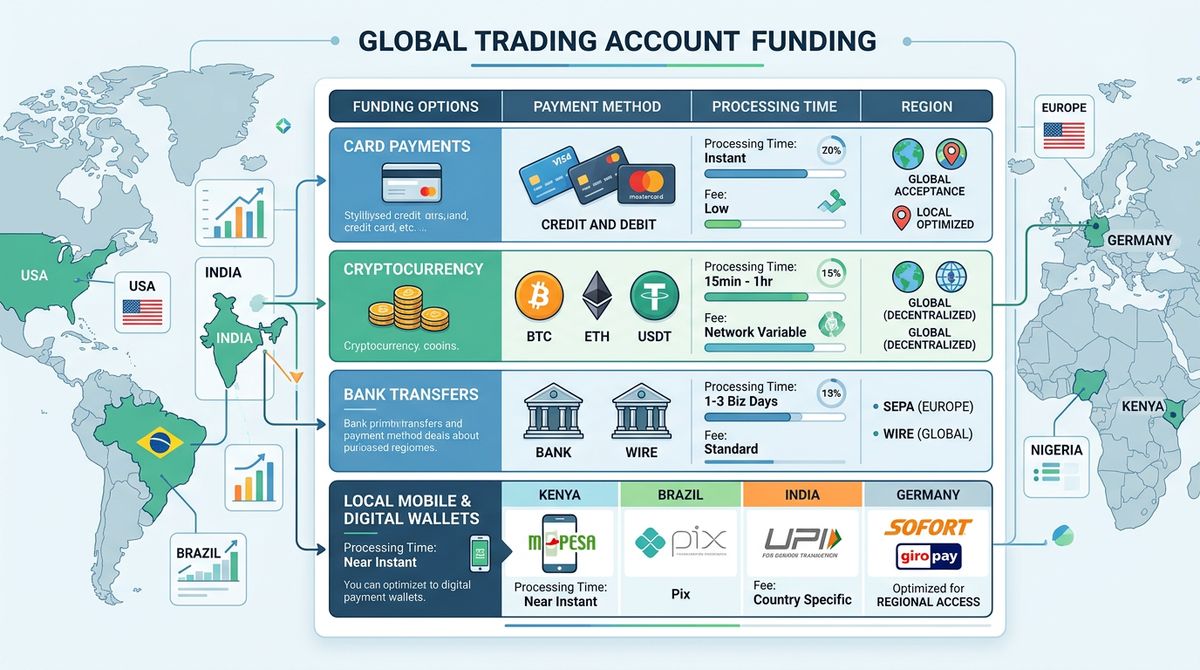
Pocket Option runs one of the broader deposit menus I’ve seen on a non-regulated broker. The platform supports cards, e-wallets, crypto, bank transfers, and region-specific local rails. A 2026 review from BinaryOptions.net counts 20+ payment methods, while the broker’s own app-store description claims 50+ (self-reported). The gap comes down to how methods are grouped and which regions are counted.
Exact availability depends on the country. A trader in Kenya may see M-Pesa. A trader in India may see UPI. A trader in an eligible region may see a local bank-transfer option. Pocket Option says it does not serve EEA residents[1], so the German example would be misleading. The deposit menu isn’t universal, and assuming otherwise is the first mistake I see new users make.
The Five Categories I Use to Think About It
I sort Pocket Option’s deposit options into five buckets. Here’s how they break down:
| Category | Specific Methods |
|---|---|
| Cards | Visa, Mastercard, Maestro |
| E-wallets / e-payments | FasaPay, Advcash, PayFix, WebMoney, Skrill, Neteller; availability varies by region |
| Crypto | BTC, ETH, USDT, USDC, BNB, LTC, XRP |
| Bank transfers | Regional bank-transfer options where available |
| Local / mobile payments | Pix, SPEI, UPI, M-Pesa, MTN Mobile Money, Airtel Money, Privat24, Online Banking VND/THB |
The method lists come from a mix of reviews and Pocket Option tutorial pages, so treat them as indicative rather than a definitive live menu. For the current state of the rails, check the Finance section inside the account.
Fees, Minimums & Speed
Fees, Minimums, and Processing Speed
The headline claim across sources is no platform fees on deposits or withdrawals, although payment providers and networks may charge separately. Older and third-party sources consistently reported a 0.5% Perfect Money transaction fee. However, Perfect Money is no longer listed on Pocket Option’s current public payment-methods page, so its present availability and any applicable charge should be confirmed inside the account before use.
Minimums are inconsistent across sources. Pocket Option markets a $5 starting deposit[2], but the checkout minimum can vary by method and region. Its Public Offer[3] lists a $0.10 contractual floor unless another amount is specified; that is not a promise that every payment method accepts $0.10.
Speed is where the method choice really pays off:
| Method | Deposit Speed | Withdrawal Speed |
|---|---|---|
| Cards (Visa/Mastercard) | Instant | 1–5 business days |
| Crypto | Instant after blockchain confirmation | Fast, network-dependent |
| E-wallets | Seconds to instant | Hours to a few days |
| Bank transfers | 1–3 business days | 3–5 business days |
Honestly, this is one of the more flexible deposit stacks I’ve seen on a non-regulated broker. The breadth of rails is a genuine strength. The catch is that “flexible to deposit” doesn’t automatically mean “flexible to withdraw,” which is the trap most users walk into. For a closer look at where money quietly leaks out of an account, the hidden costs traders overlook deserve a separate read.
Verification Rules That Trip People Up
KYC isn’t optional. Multiple tutorials confirm that identity verification may be required before card deposits and is definitely required before any meaningful withdrawal. The documents and timing are covered in detail in this walkthrough of the KYC process.
Bank transfers add a same-name funding rule. A Nigeria-focused Naira tutorial spells it out clearly: $5 minimum, a 1-hour window to complete the transfer, and the sending bank account name must match the verified Pocket Option account name. Mismatched names get the deposit bounced or the funds held.
My take: verify the account early, before depositing a single dollar. Chasing verification mid-withdrawal is the number one avoidable headache, and it’s the root cause behind most withdrawal complications users hit.
Choosing a Method
How I'd Pick the Right Method for My Situation
Match the rail to the situation. Here’s the decision logic I’d use:
Crypto-first traders should fund with BTC or USDT. Speed is best, friction is lowest, and the same rail pays out cleanly. If a wallet already holds digital assets, this is the path of least resistance.
Card users get the simplest UX (instant deposits, familiar checkout) but pay for it on the way out with 1 to 5 business-day withdrawal windows. Fine for casual funding, frustrating if quick access to capital matters.
Regional users should default to local rails wherever they’re available. UPI in India or M-Pesa in Kenya where the live menu offers them. The EEA is excluded by Pocket Option’s own country notice. Fewer FX conversion headaches, faster settlement, and fewer compliance surprises than routing through a card issued in another country.
E-wallet users sit in the middle. Skrill, Neteller, and Advcash deposit fast and withdraw faster than cards, but availability varies by region.
The punchy version: match the rail to the region, verify before depositing, and never assume a method that works in one country works in another. Note that Pocket Option does not accept clients from the US, UK, EEA, Israel, Japan, Philippines, or Brazil — deposit methods in those regions are technically unavailable regardless of what the interface shows. Payment stacks change, and fee details should be reconfirmed directly in the Finance section before funding. My overall Pocket Option reliability review covers the broader reliability and risk questions behind that decision. For broader context on how the platform handles money flow end to end, this breakdown of how the broker operates covers the mechanics.
FAQs
Frequently Asked Questions
What’s the minimum deposit on Pocket Option?
Pocket Option advertises deposits from $5, while the exact minimum depends on the live method and region. Its Public Offer specifies a $0.10 default contractual minimum unless another amount is shown; the checkout figure is what matters. Confirm the live minimum in the Finance section before sending.
Does Pocket Option charge deposit fees?
Reviewers generally report no Pocket Option platform fee on deposits across most methods, although banks, card issuers, and crypto networks may charge separately. Older third-party sources reported a 0.5% Perfect Money transaction fee, but Perfect Money is not listed on the current public payment-methods page, so availability and any applicable charge should be confirmed inside the account.
How long do crypto deposits take to credit?
Crypto deposits credit after blockchain confirmation, which is usually fast but network-dependent. BTC takes longer than USDT on Tron or BNB on BSC. The deposit address must be the exact one shown in the Finance section for the chosen network.
Can I deposit with someone else’s card or bank account?
No. Pocket Option requires the funding source name to match the verified account name. Same-name rules apply especially to bank transfers and are a common reason deposits get rejected or funds get held.
Why is verification required before withdrawal?
KYC is standard practice for compliance reasons, even at non-regulated brokers. Skipping it leads to withheld funds and is the most common cause behind a restricted or locked account.
Which deposit method is best for fast withdrawals?
Crypto can be fast after Pocket Option processes the request, but it is not guaranteed to be the fastest. The payment policy[4] allows up to five business days for the broker’s withdrawal step, and banks, cards, wallets and networks add their own delays. For the full picture on platform reliability and what to verify before funding, this check on the broker’s safety profile is worth reading first.