Risk and regulatory notice: Binary options are high-risk, all-or-nothing products and may be prohibited or restricted for retail customers where you live. You can lose the full amount committed to a trade. Verify the legal entity and its authorisation in an official regulator register before sending money or identity documents. This page is general information, not personal financial advice.
Most Quotex reviews follow the same template: glowing demo account praise, a quick note about regulation, and a “verdict” that hedges enough to keep the affiliate link clicking. The Quotex red flags that actually matter to a retail trader rarely make it past the first scroll. I want to talk about what those reviews skip, because the gap between marketing copy and operational reality on this platform is wider than most evaluators admit.
Regulatory Gaps
The Regulatory Gaps Few Reviews Spell Out
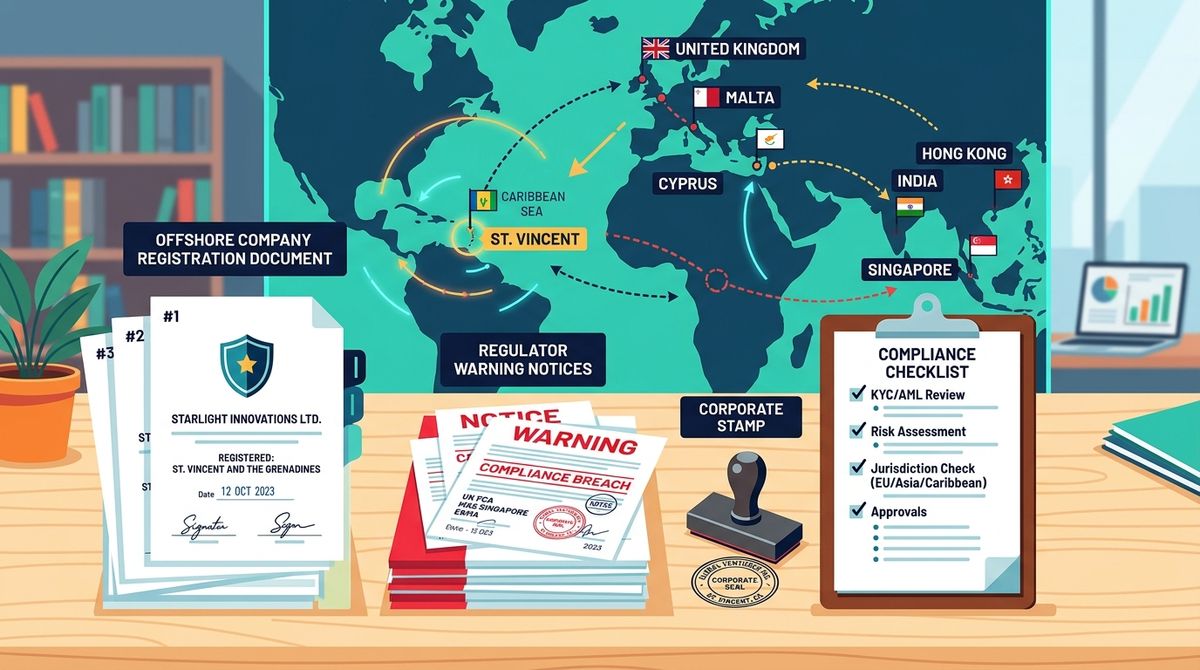
Calling Quotex “lightly regulated” understates the problem. It has zero Tier-1 oversight. No SEC, no CFTC, no FCA, no ASIC, no CySEC. The company operates as ON SPOT LLC GROUP[1], registered in St. Kitts and Nevis, with Awesomo Ltd and Maxbit LLC appearing in older regulator notices. Entity-name shuffling is not a clerical detail. It complicates legal action, fragments complaint history, and makes it harder for any regulator or court to pin accountability on a stable counterparty.
The warning list is longer than most reviewers acknowledge. Italy’s CONSOB, Portugal’s CMVM, Indonesia’s BAPPEBTI, and Spain’s CNMV have each issued notices about named Quotex entities or domains. WikiFX assigns its Quotex/Maxbit LLC profile a 1.32/10 safety score as of 28 September 2026.
What this means in practical terms: no published, audited proof of segregated client funds that I could find, no investor compensation scheme identified in the published Service Agreement[1], and no independent ombudsman named in its dispute procedure when something goes wrong. If the broker decides your withdrawal is denied, the published complaint path points first to the company and then to a court, not to an ombudsman. That is the structural cost of an offshore venue, and it matters even when everything works fine, because the protection only matters when it doesn’t. For a deeper look at how this plays out across the whole platform, my full breakdown of fees, payouts, and risk signals covers more ground.
Withdrawal Concerns
The Withdrawal Pattern That Should Worry You
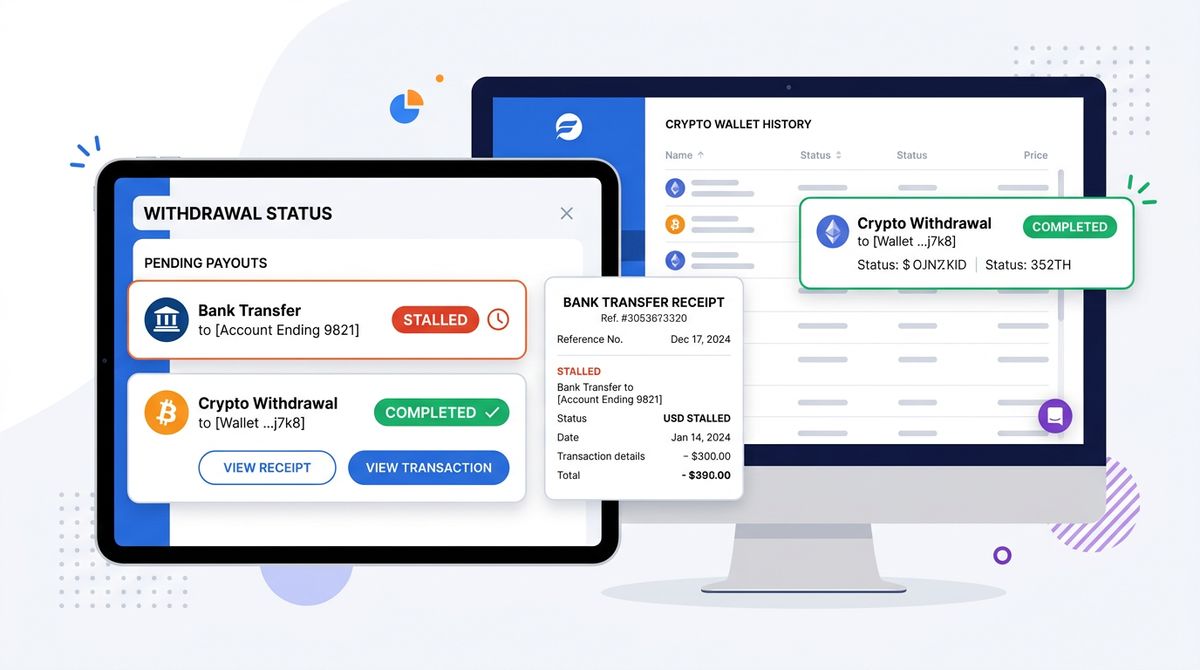
This is the part most reviews refuse to engage with seriously. Deposits credit fast. Withdrawals stall. That asymmetry is not an accident, and the pattern is too consistent across years and jurisdictions to wave off as isolated support failures.
One source distinction matters before getting to the complaints. WikiFX has a Quotex profile for quotex.io that names Maxbit LLC, and a separate quotex-international.com profile that it labels “Fake Broker.” Neither names ON SPOT LLC GROUP, the company in the current Service Agreement[1]. That does not make the user reports disappear. It means they are records of what people claimed under those listings, not proof that every case involved the same company behind qxbroker.com today.
Published user complaints from 2024 to 2026 describe withdrawal queues lasting 47 days, requests canceled without explanation, and accounts suspended at the exact moment users requested payouts. The reported amounts vary wildly, which is itself revealing: $69 and $60 deposits tied to disputed withdrawals, and an Unverified user report where an account grew to roughly $43,000 before suspension cut off the requested withdrawal.
The excuses recycle. “Financial operator delays.” Sudden additional KYC requests after verification was already complete. Requests for “tax payments” before funds release, which should make you pause and verify the request before sending more money. Funds reported as sent that never arrive, even when users supply Binance transaction proofs or bank statements.
Here is the framing reviews almost always miss: a platform where money flows in easily but stalls on the way out is not having a customer service problem. It is exhibiting a structural pattern. To me, that pattern raises questions about how reliably withdrawals are handled. The full mechanics of getting paid (and the workarounds that sometimes help) deserve their own practical walkthrough on withdrawal timing, because the official documentation doesn’t match what users actually experience.
Deposit Failures and Account Suspensions
The flip side is just as concerning. Users in India and Vietnam have reported money debited from their bank accounts or crypto wallets that never appeared in their Quotex balance, even after submitting payment proof. Separately, a May 2024 complaint described 100 USDT sent from Binance staying at a zero balance. An August 2024 complaint reported 52 USDT from Bybit vanishing the same way.
Account suspensions form a parallel pattern. A Peru-based trader reported finding a $266 account drained to zero by a single unauthorized operation. An Argentine user described a “suspension loop” where the mobile app forced re-login during trading hours and immediately displayed a violation notice. Reports of altered candles, shifting deposit addresses, and trades closing at unexpected times appear repeatedly. These complaints span 2024, 2025, and 2026. This is not legacy criticism.
Product & Marketing Risks
Product Risk and Marketing Tactics Reviews Gloss Over
Two issues get buried under interface compliments. The first is structural: binary options are an all-or-nothing product that sits closer to wagering than investing. Short expiries push users toward overtrading. The math compounds against the trader regardless of how clean the chart looks. Even a perfectly run binary options venue is a hostile environment for capital preservation, and Quotex is not a perfectly run venue. The breadth of what you can actually trade on the platform does not change the underlying product mechanics.
The second issue is the marketing ecosystem. Quotex runs through multiple domains: quotex.com, qxbroker.com, quotex.io, partner.qxbroker.com, and references to rcinvest.xyz appear in watchdog reports. Brazilian signups silently redirect from quotex.com to qxbroker.com. Trustpilot’s own page notes the rating is unavailable due to a guidelines breach and that fake reviews have been removed. Heavy affiliate and referral promotion drives much of the visible enthusiasm online, and one affiliate himself reportedly had $24,340 in commissions withheld.
| Red flag category | What to verify | Where to check |
|---|---|---|
| Legal entity | Current operating company name | Broker’s terms of service |
| Local authorization | Whether broker is licensed in your country | Your national regulator’s warning list |
| Withdrawal viability | Smallest possible test withdrawal before scaling | Your own account, with screenshots |
| Bonus terms | Volume requirements that lock withdrawals | Bonus T&Cs (read before accepting) |
| Domain consistency | Whether signup redirects to a different URL | Browser address bar |
A simple due-diligence routine cuts through most of this noise. Verify the legal entity, then search your national regulator’s warning list directly rather than trusting third-party star ratings. Test with the smallest deposit the platform allows and attempt a withdrawal before adding more. Treat “guaranteed profit” language, pressure to deposit quickly, or bonus terms that restrict withdrawals as immediate exit signals. If a bonus offer locks the bonus funds until you hit an aggressive turnover target, that is not a promotion, it is a hold.
Overall Assessment
How to Read These Signals as a Whole
Any single complaint can be dismissed. A bad review here, a delayed withdrawal there, a regulator warning that maybe applies to a different entity. The reason these red flags matter is that they cluster. Unregulated offshore registration, repeated entity renaming, multi-jurisdiction warnings, a consistent withdrawal-obstruction pattern across years, suspicious chart behavior, and a binary options product that punishes the user even when it works correctly. Each weighs differently. The offshore status is a structural con even if everything works perfectly until it doesn’t, and the recurring complaint pattern suggests “doesn’t” arrives often enough to take seriously.
If money is already on the platform, document everything: balance screenshots, transaction history, every support chat. Request proof of payment for any withdrawal the broker claims to have processed. Contact your bank or wallet provider quickly if a deposit never credited. File a complaint with your national regulator if Quotex actively solicits users in your country. And be wary of “recovery agents” who surface in comment threads asking for fees upfront. That is a second scam layered on the first.
The honest read on Quotex is not that every user loses money. Plenty deposit, trade, and withdraw small amounts without incident. The honest read is that the system works smoothly until it doesn’t, and when it doesn’t, the offshore structure means there is nowhere meaningful to appeal. That asymmetry is the red flag underneath all the others.
Editorial basis: This review includes my opinions and interpretations of the public records, broker materials, cited sources and reported user experiences available at the time of writing. User complaints are allegations unless independently verified. Strongly worded conclusions about patterns, incentives or priorities are editorial assessments; they do not imply that I have access to a broker’s private communications or internal decision-making. Platform terms, ownership and regulatory status can change, so verify current information before acting.